Being involved in a car accident can be overwhelming. This educational guide explains California's legal requirements after accidents, common steps people typically take, and general information about options that may be available. This information is educational only and does not constitute legal or medical advice for your specific situation.
Disclaimer: The information provided here is for educational purposes only. This is not legal advice, medical advice, or a recommendation for specific action in your situation. Every accident is different. For guidance specific to your circumstances, consult with licensed medical professionals for health concerns and licensed attorneys for legal matters.
California's Legal Requirements After Accidents
California law establishes certain requirements for drivers involved in accidents. Understanding these legal obligations can help you avoid potential violations.
Stopping at the Scene
California Vehicle Code Section 20001-20004 requires drivers involved in accidents to stop at the scene. Leaving the scene of an accident can result in criminal charges, even if you were not at fault for the collision.
Information Exchange Requirements
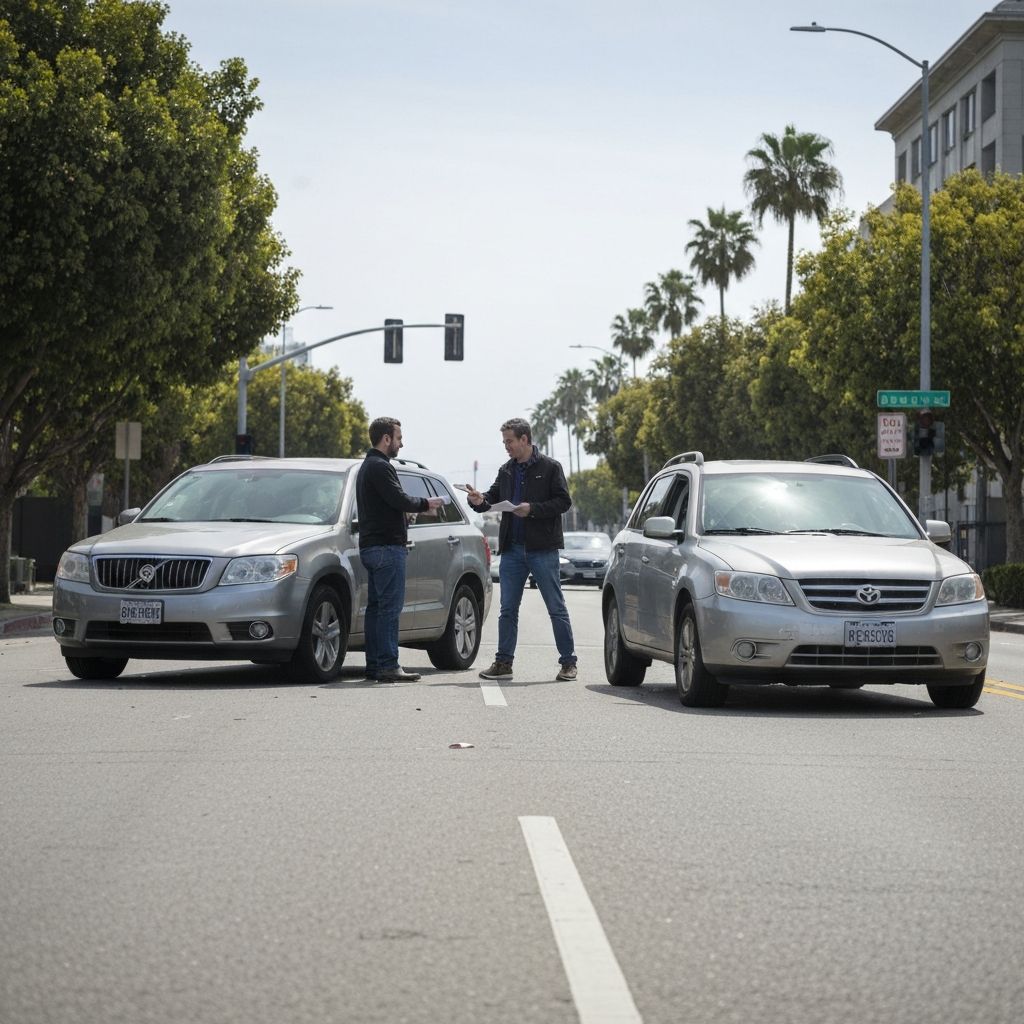
California Vehicle Code Section 16025 requires drivers to exchange certain information with other parties involved in an accident:
- Driver's name and address
- Vehicle registration number
- Driver's license information (upon request)
- Insurance information
Reporting Requirements
California law requires reporting certain accidents:
- Accidents involving injury or death must be reported to law enforcement
- Accidents involving property damage over $1,000 must be reported
- A written report (SR-1) must be submitted to the DMV within 10 days for accidents involving injury, death, or property damage over $1,000
These are legal requirements under California law. Violations can result in license suspension or other penalties.
Safety Considerations
After an accident occurs, various safety factors come into play. Understanding common safety practices can provide context for decision-making.
Scene Safety
Hazards at accident scenes can include:
- Traffic continuing through the area
- Fuel leaks or fire risk
- Debris in roadways
- Injured persons requiring assistance
California law allows moving vehicles to a safe location if they're drivable and blocking traffic. Some people use hazard lights, flares, or warning triangles to alert approaching drivers.
Emergency Services
Emergency services (911) can dispatch:
- Police to document the scene and investigate
- Paramedics to evaluate injuries
- Fire services if needed for safety hazards
Whether to call emergency services depends on the specific circumstances. California law requires reporting certain types of accidents as noted above.
Documentation Options
Various types of documentation can be created after an accident. Understanding what people commonly document can help you understand the process.
Police Reports
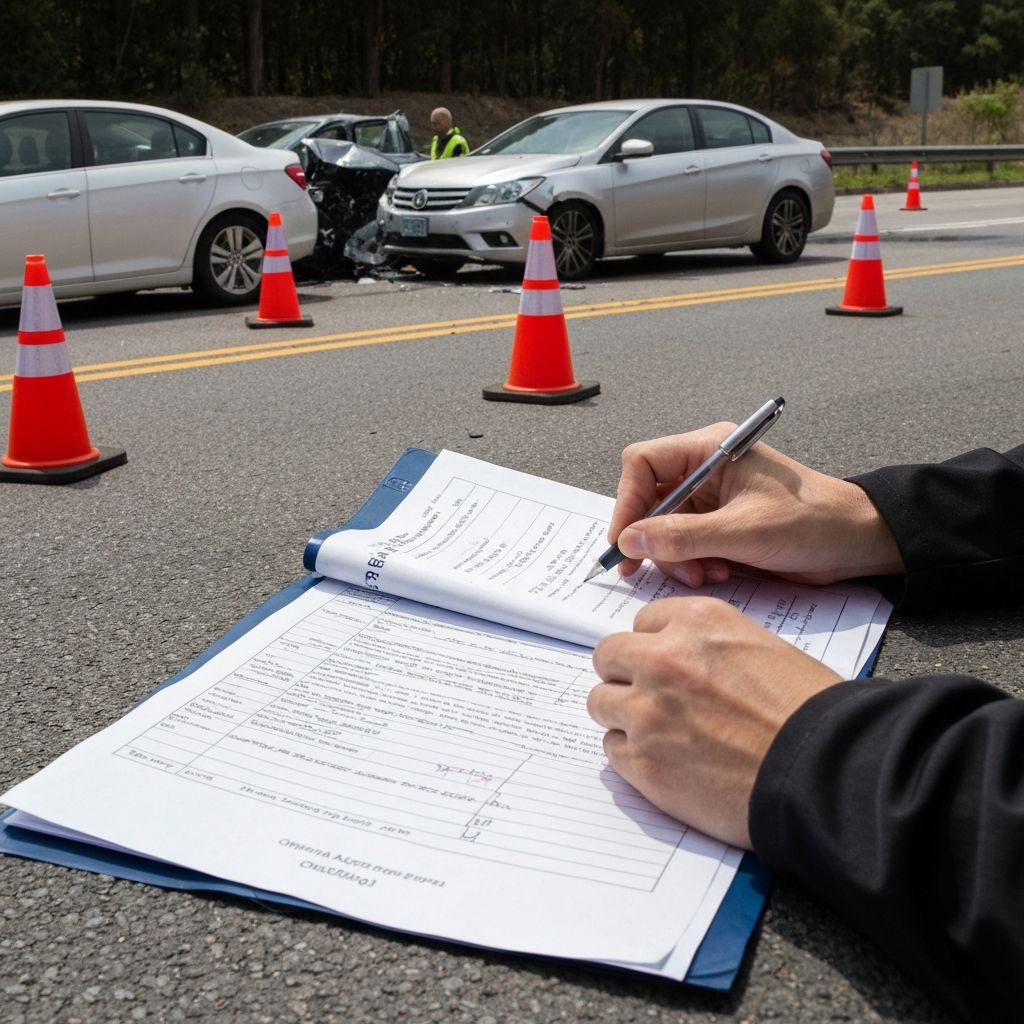
When law enforcement responds to an accident, they typically create an official report that includes:
- Officer observations of the scene
- Statements from drivers and witnesses
- Diagram of the accident
- Citations issued (if applicable)
- Officer's assessment of contributing factors
Police reports are often used in insurance claims and legal proceedings. The report number allows parties to obtain copies later.
Photographic Documentation
Many people photograph accident scenes. Common subjects include:
- Vehicle damage from multiple angles
- Road conditions and weather
- Traffic signs and signals
- Skid marks or debris patterns
- Vehicle positions relative to roadway features
These photographs can serve as evidence if disputes arise about how the accident occurred.
Witness Information
Independent witnesses—people not involved in the accident—can provide valuable perspectives if liability becomes disputed. Some people collect witness names and contact information at the scene.
Medical Evaluation Considerations
Medical evaluation after accidents presents various considerations. This information is educational and not medical advice for your specific situation.
Types of Medical Facilities
Different medical facilities serve different purposes:
Emergency Rooms provide comprehensive emergency care and can diagnose and treat serious injuries. They have imaging equipment (X-rays, CT scans, MRI) and specialists available.
Urgent Care facilities handle less severe medical issues and typically have shorter wait times than emergency rooms. They may refer patients to emergency rooms for conditions requiring more intensive care.
Primary Care Physicians can evaluate injuries and provide follow-up care, though they may not be immediately available after an accident.
Delayed Symptom Phenomenon
Medical literature documents that certain injuries may not present immediate symptoms:
- Adrenaline response - The body's fight-or-flight response can temporarily mask pain
- Soft tissue injuries - Whiplash and similar injuries often develop symptoms 24-48 hours after trauma
- Concussions - Brain injury symptoms can appear hours or days after impact
- Internal injuries - Damage to internal organs may not cause immediate obvious symptoms
This phenomenon explains why some people feel fine immediately after accidents but develop symptoms later.
Timing and Insurance Claims
The timing of medical evaluation can affect insurance claims. Insurance companies often scrutinize gaps between accidents and first medical treatment. While treatment timing alone doesn't determine claim validity, it's a factor insurance companies consider during claim evaluation.
Insurance Notification
Insurance policies typically contain notification requirements. Understanding these requirements helps avoid potential coverage issues.
Your Own Insurance
Most auto insurance policies require prompt notification of accidents. "Prompt" is often interpreted as within 24-72 hours, though specific policy language varies.
Notifying your own insurance is typically required even if you believe another party was entirely at fault. Your policy may provide coverage through:
- Medical Payments (MedPay) coverage
- Personal Injury Protection (PIP)
- Uninsured/Underinsured Motorist coverage
- Collision coverage for vehicle damage
Other Party's Insurance
Communication with another party's insurance company involves different considerations. These companies represent their policyholders' interests, not yours.
Common requests from other parties' insurance companies include:
- Recorded statements about the accident
- Medical record authorizations
- Settlement negotiations
How and when to communicate with other insurers is a decision many people make in consultation with legal counsel.
Legal Consultation Options
Understanding when and how people engage legal representation helps contextualize this option.
Contingency Fee Arrangements
Personal injury attorneys typically work on contingency, meaning:
- No upfront fees to hire the attorney
- Attorney fees are a percentage of recovery (typically 33-40%)
- Fees are only collected if compensation is recovered
- Case costs (filing fees, expert fees) are typically advanced by the attorney
Free Consultations
Most personal injury attorneys offer free initial consultations. These meetings allow you to:
- Discuss your situation
- Understand potential legal issues
- Learn about the claims process
- Ask questions about representation
- Make an informed decision about whether to hire an attorney
What Attorneys Do
Personal injury attorneys typically handle:
- Investigation and evidence gathering
- Communication with insurance companies
- Medical provider coordination
- Damage calculation and claim valuation
- Settlement negotiation
- Litigation if necessary
California's Comparative Negligence Law
California follows "pure comparative negligence" (California Civil Code Section 1431.2). This means:
Even if you were partially at fault for an accident, you can still recover damages. Your recovery is reduced by your percentage of fault.
Example: If you have $100,000 in damages and are found 30% at fault, you can recover $70,000 (70% of total damages).
This differs from some states that bar recovery if you're more than 50% at fault. California has no such bar—even someone 90% at fault can recover 10% of their damages from another at-fault party.
Time Limits for Legal Action
California law establishes time limits (statutes of limitations) for filing lawsuits:
- Personal injury claims: Generally 2 years from the date of injury (California Code of Civil Procedure § 335.1)
- Property damage claims: 3 years from the date of damage (California Code of Civil Procedure § 338)
- Claims against government entities: Written claim must be filed within 6 months; lawsuit within 6 months after claim is denied
These deadlines are strict. Missing them typically bars your right to file a lawsuit, regardless of the merits of your claim.
California Insurance Requirements
California requires minimum liability insurance coverage of:
- $15,000 per person for injury/death
- $30,000 per accident for injury/death
- $5,000 for property damage
These minimums are often inadequate for serious accidents. Many drivers carry higher limits, but some carry only the minimum required coverage.
Uninsured/Underinsured Motorist Coverage
This optional coverage protects you if you're hit by someone without insurance or without adequate coverage. California insurance companies must offer this coverage, though drivers can decline it in writing.
Communication Considerations
What you say after an accident can have implications for insurance claims and legal proceedings.
Statements About Fault
Statements about fault or responsibility—even informal ones—can be used in insurance claim evaluation and litigation. Some examples:
- "I'm sorry" might be interpreted as accepting fault
- "I didn't see you" could be used as evidence of negligence
- "I was distracted" could constitute an admission
California Evidence Code sections 1220-1230 allow party admissions as evidence in legal proceedings.
Social Media Considerations
Social media posts, photos, and check-ins can be discovered in litigation. Posts that might seem innocent can be misinterpreted or taken out of context.
Medical Treatment Without Insurance
People without health insurance have several options for obtaining medical care after accidents:
Emergency Care Obligations
Federal law (EMTALA) requires hospital emergency departments to provide medical screening and stabilization treatment regardless of ability to pay. Emergency care cannot be denied due to lack of insurance.
Medical Lien Arrangements
Some medical providers treat accident victims on a "lien" basis, meaning:
- Treatment is provided without upfront payment
- Medical bills are paid from eventual settlement or judgment
- The provider holds a lien against any recovery
Personal injury attorneys often facilitate these arrangements with providers in their network.
Educational Summary
This guide has outlined California's legal requirements after accidents, common steps people take, and general information about available options. Key takeaways include:
- California law requires stopping at the scene and exchanging information
- Certain accidents must be reported to authorities and the DMV
- Various documentation options exist (police reports, photos, witness information)
- Different types of medical facilities serve different purposes
- Insurance policies typically require prompt notification
- California follows pure comparative negligence
- Strict time limits apply for legal action
- Free legal consultations are commonly available
Remember: This information is educational and general in nature. It does not constitute legal advice, medical advice, or recommendations for your specific situation. For guidance about your particular circumstances, consult with licensed professionals—medical providers for health concerns and attorneys for legal matters.